Cat Tree Buying Guide: Height, Stability and Placement That Cats Love
Gear Guides 6 min read reviewed November 2026, 5 sources
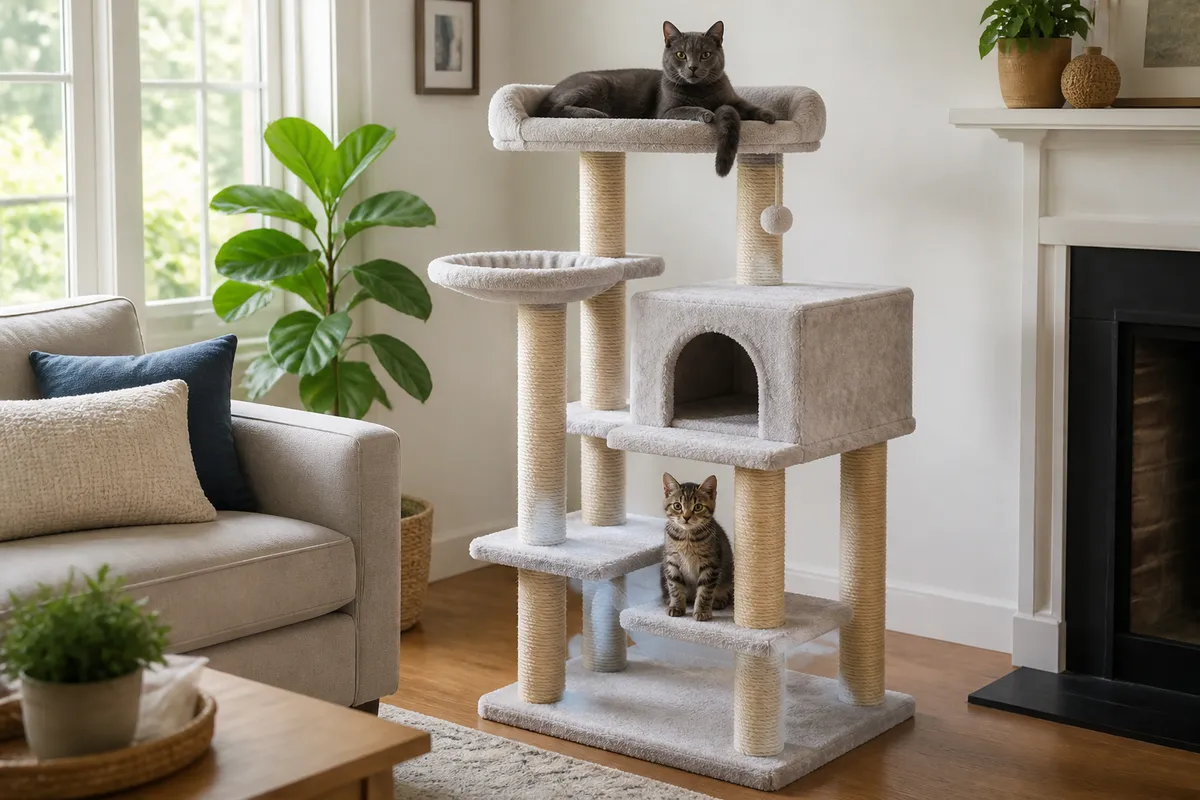
A good cat tree is stable enough not to wobble when your cat launches onto it, tall enough to give a real view of the room, and wrapped in a scratching surface your cat likes, usually sisal. Where you put it matters as much as what you buy: a cat tree by a window in the living room gets used, the same tree in a spare room collects dust.
Why cats need a cat tree
Cats live in three dimensions. The 2013 AAFP and ISFM Environmental Needs Guidelines, written by feline veterinarians and behavior experts, list elevated areas (perches) among the key resources every cat needs, alongside food, water, litter boxes and resting places. Access to an elevated spot increases a cat's vertical space and lets it monitor its surroundings, which helps it feel safe.
In multi-cat homes, height also keeps the peace. The same guidelines explain that offering several perching and hiding spots gives each cat choices and a sense of control, which reduces fear and conflict. International Cat Care adds that cats prefer to play where there are obstacles, various levels and high places for "timeout" when needed.
A cat tree also doubles as a scratching station, which can save your sofa. For apartment cats in particular, it's one of the most useful pieces of furniture you can buy.

What matters when buying a cat tree
Before you fall for a photo, check the boring details. They decide whether your cat trusts the tree or ignores it.
- Stability: the tree shouldn't sway when you push the top platform. A wide, heavy base and thick posts matter more than the number of levels
- Platform size: your cat should be able to lie down fully stretched on at least one platform, with a raised rim for nervous cats
- Scratching surface: many cats prefer sisal rope, so look for sisal-wrapped posts rather than carpet only
- Post height: at least one post should be tall enough for a full stretch
- Materials: solid wood or thick particle board holds screws better than thin cardboard tubes
- Cleaning: removable, washable cushions and covers make hair and hairball cleanup easier
- Replaceable parts: posts that can be rewrapped or swapped extend the tree's life
- Your cat's age: kittens and seniors do better with low steps, ramps and short jumps
Cat tree, cat tower or cat condo? Types compared
The names overlap a lot in stores. A cat tower usually means a tall, narrow tree, a cat condo is an enclosed box or "house" built into a tree, and climbing towers or floor-to-ceiling trees are braced against the ceiling for extra stability. Wall-mounted shelves and window perches are alternatives when floor space is tight; window perches have their own guide.
| Type | Best for | Watch out for |
|---|---|---|
| Small cat tree (under about 3 ft) | Kittens, seniors, small apartments | Too short for a full scratching stretch |
| Tall cat tree or cat tower | Active adults, multi-cat homes | Must be stable; check base width and weight |
| Floor-to-ceiling climbing tower | Climbers, tight floor space | Needs a solid ceiling and correct tension |
| Cat tree house with condos | Shy cats that like to hide | Hard to clean inside; check the opening size |
| Modern or furniture-style tree | Design-focused living rooms | Style sometimes beats function: check sisal and stability |
| Wall shelves and bridges | Small spaces, cat highways | Must be anchored into studs |
| Outdoor cat tree | Catios and enclosed patios | Weatherproof materials only |
Tall cat tree: how tall is tall enough?
For scratching, there's actual data. An internet survey of cat owners published in the Journal of Feline Medicine and Surgery in 2016, summarized by the American Association of Feline Practitioners (AAFP), found that cats used posts more when they were upright structures with two or more levels and taller than three feet, which is taller than most cats' stretched-out height. Cats nine years and younger preferred rope (sisal) over carpet and cardboard, while older cats preferred carpet.
For climbing and lounging, taller usually means more fun but also more leverage on the base. A tall cat tree for a heavy cat needs a broad, weighted base or a wall anchor. If you share your home with a large breed such as a Maine Coon, see our guide to cat trees for large cats.
Kittens and seniors are the exception. They'll use a tall tree more happily if the levels are close together, like a staircase, rather than requiring big leaps.
Modern, cute and flower cat trees: style without regret
Modern cat trees in wood, rattan or felt and "cute" designs shaped like flowers, cacti or clouds are popular because they don't scream "cat lives here". There's nothing wrong with that, as long as the design passes the same checks as any other tree.
Give a decorative tree the push test, look for a real sisal post somewhere, and check that the platforms are big enough to lie on. Thin felt petals and tiny bowl beds may look adorable but often fit only kittens. If you love a design that lacks a good scratching surface, add a separate tall sisal post next to it.
Where to put a cat tree
Location can make or break it. The AAFP summary of scratching research recommends placing scratching structures in living areas where people spend time, near the cat's sleeping area (cats often stretch and scratch when they wake up) and in places where territory might be challenged, such as near entry doors and windows.
Variety helps too. The same research summary found that unwanted scratching decreased as the number of different types and styles of scratching posts in the home increased. So a cat tree in the living room plus a simple scratching post by the bed often works better than one giant tree alone. In homes with several cats, a tip from experienced owners: aim for at least as many comfortable perches as you have cats.
- Next to a window with a view of birds, trees or the street
- In the living room or wherever your household gathers in the evening
- Away from loud appliances and busy walkways
- In multi-cat homes: more than one climbing spot in different rooms, so no cat can guard the only high ground
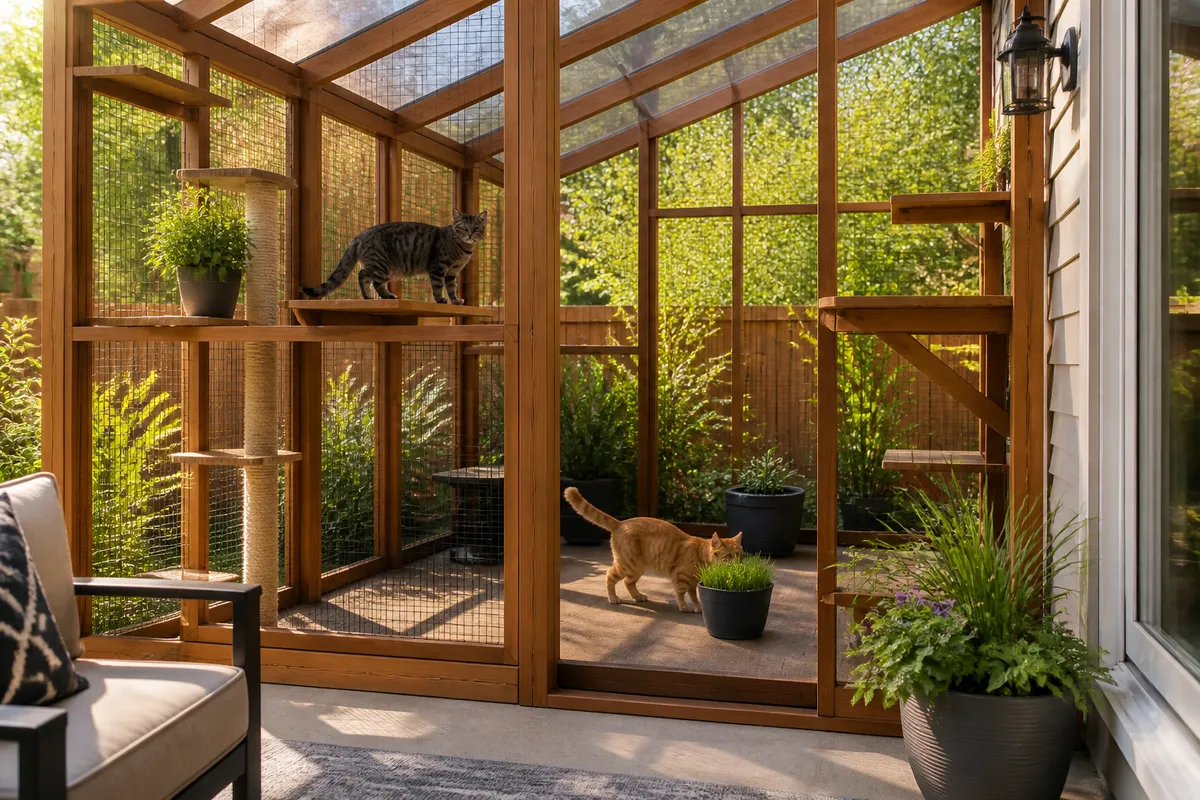
- In a catio: an outdoor cat tree in weatherproof materials, as Humane World for Animals suggests for enclosures

Common cat tree mistakes
Most cat trees that go unused fail for the same few reasons. Fixing them is usually cheaper than buying a new one.
- Wobble: one bad wobble can scare a cat off for good, so anchor tall trees to the wall with furniture straps
- Hidden away: a tree in a spare room or dark corner rarely gets used
- Carpet only: many cats prefer sisal for scratching, so a carpet-covered tree may still leave your sofa as the favorite
- Platforms too small: if your cat hangs over the edges, it won't settle there
- Dangling strings left unattended: the AAFP and ISFM advise putting away toys with string or parts a cat could swallow after play
- Worn-out sisal left in place: rewrap or replace posts before they're bald
How to get your cat to use the cat tree
Give your cat a reason to explore. Drag a wand toy up the levels, toss treats onto the platforms, or rub a little catnip on a post if your cat responds to it. Feed a few meals next to it for the first days.
Reward the behavior you want right away. The AAFP's guidance for scratching training says to reward your cat immediately, within three seconds, when it uses the approved surface, using treats, play, petting or catnip. Never place your cat on the tree by force; let it discover the tree on its own terms.
Patience pays. Many cats inspect a new tree for days before claiming it, and once they do, they'll act like it was their idea all along.
Frequently asked questions
How tall should a cat tree be?
For scratching, research summarized by the AAFP found cats prefer upright structures taller than three feet with two or more levels. For climbing, taller trees are fine as long as they're stable or anchored. Kittens and seniors need levels close together.
What is the difference between a cat tree and a cat tower?
The terms overlap. Cat tower usually means a tall, narrow tree, while cat tree is the general term. A cat condo is an enclosed hideaway built into a tree.
Where is the best place to put a cat tree?
Near a window in a room where your family spends time. The AAFP also recommends scratching areas near the cat's sleeping spot and near doors or windows where territory might feel challenged.
Do cats need a cat tree?
They need elevated perches and scratching surfaces, which feline veterinary guidelines list as key resources. A cat tree is the easiest way to provide both, but wall shelves, window perches and sturdy furniture can also work.
How do I stop my cat tree from wobbling?
Tighten all bolts, place it on a level floor and anchor it to the wall with furniture straps. If it still sways, it may be too tall or light for your cat.
Can I put a cat tree outside?
Only inside a secure catio or enclosure and only if it's made of weatherproof materials. Humane World for Animals suggests cat trees and shelves as good additions to a catio.
Sources
- AAFP and ISFM Feline Environmental Needs Guidelines, American Association of Feline Practitioners / International Society of Feline Medicine
- Claw Friendly Educational Toolkit: Literature Review Summaries, American Association of Feline Practitioners
- Claw Friendly Educational Toolkit: Client Resources, American Association of Feline Practitioners
- Playing with your cat, International Cat Care
- Catios: Safe Outdoor Enclosures for Cats, Humane World for Animals
Last reviewed: November 2026